Choose backup power from your devices outward
Understand watts, watt-hours, and why a battery is only part of an outage plan.
Start with a short priority list
List the devices you want to keep running, then separate essentials from conveniences. Write down how many hours each must operate. A phone charged once a day and a device running continuously create different energy demands. The calculator includes example loads to help organize this list; replace those examples with measurements or manufacturer information before purchasing equipment.
Distinguish power from stored energy
Watts describe the rate at which a device uses power. Watt-hours describe energy over time. A hypothetical 20-watt load running for five hours uses 100 watt-hours before conversion losses. Add the energy for all selected loads, then account for losses and uncertainty. Separately check the inverter’s continuous output, starting surge, plug types, and compatibility. Enough battery energy does not guarantee that a device can start.
Make the recharge plan explicit
The kit duration and days without recharging are different controls. A seven-day food plan does not mean one battery will run for seven days. Decide how long you need to operate before you can recharge, what source will be available, and what happens if that source fails. Solar-panel ratings are not a promise of all-day output; location, weather, shading, and equipment compatibility affect what you receive.
Test the complete setup before relying on it
Try the intended device, cable, and power source together in ordinary conditions and record what you observe. Keep charging instructions with the equipment. Medical equipment needs a plan agreed with its supplier or care team, including what to do when backup power is exhausted. Fuel generators require a different safety plan: CDC says to operate them outdoors at least 20 feet from doors, windows, and vents. Never bring outdoor-only equipment into living spaces.
Your next steps
- List devices and realistic operating hours.
- Check both energy capacity and output limits.
- Identify a recharge source and a fallback.
- Test the complete setup and retain instructions.
Source and further reading
CDC: use a generator safely. Source checked October 28, 2026. Examples and planning workflows are provided by Offgrid Family.
Put this into your household plan →Explore all preparedness guides
Products to compare
Jackery Explorer 300 Plus
Check the exact model, package contents and fit for your household. We have not personally tested this product.
Check price on Amazon ↗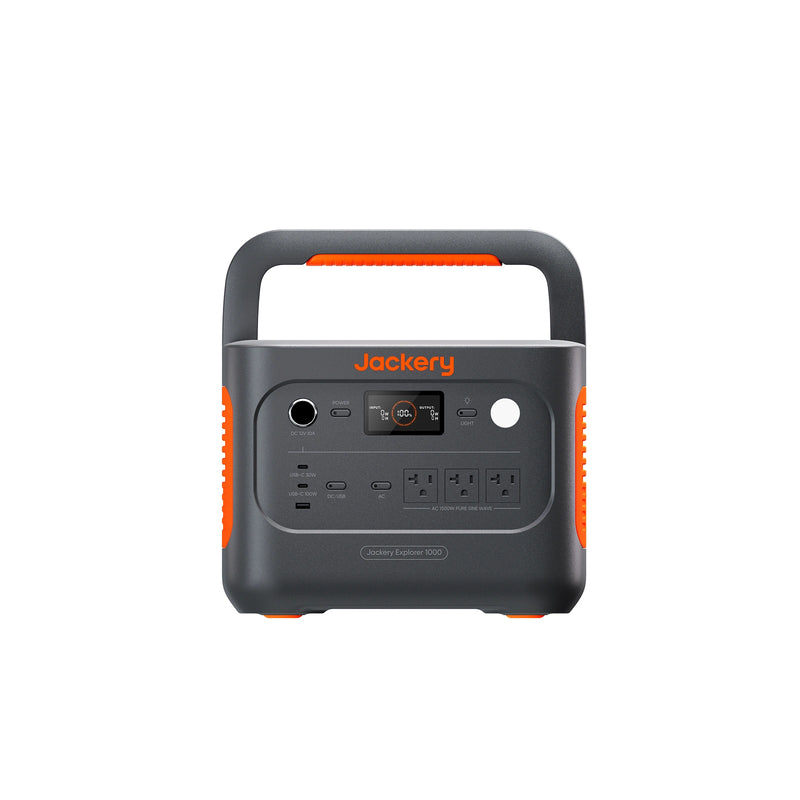
Jackery Explorer 1000 v2
Check the exact model, package contents and fit for your household. We have not personally tested this product.
Check price on Amazon ↗First Alert battery-operated carbon monoxide alarm
Check the exact model, package contents and fit for your household. We have not personally tested this product.
Check price on Amazon ↗